Technology, Literacy, Creativity
Welcome! I’m Christopher Bergeron—an instructional designer, university program director, children’s book author, and full-time liveaboard sailor. This site is a hub for everything I do: from innovative online education and creative storytelling to salty tales from life aboard a sailboat.

“Sailing Through Learning, Creativity & Adventure”
…
Creativity & Children’s Books

As the author and illustrator behind the “Adventures of Captain Apollo,” I’m exploring the wild world of creativity, storytelling, and art.
Instructional Design & Teaching

I lead graduate and undergraduate programs in instructional design and hospitality management at Bellevue University. My focus is on creating meaningful, accessible learning experiences in distance education.
Life Aboard a Sailboat

I live full-time on a 34-foot sailboat, navigating the East Coast with my sons and our cat, Apollo. From maintenance to minimalist living, I share my journey at FromTheGalley.com
Distance Learning & EdTech
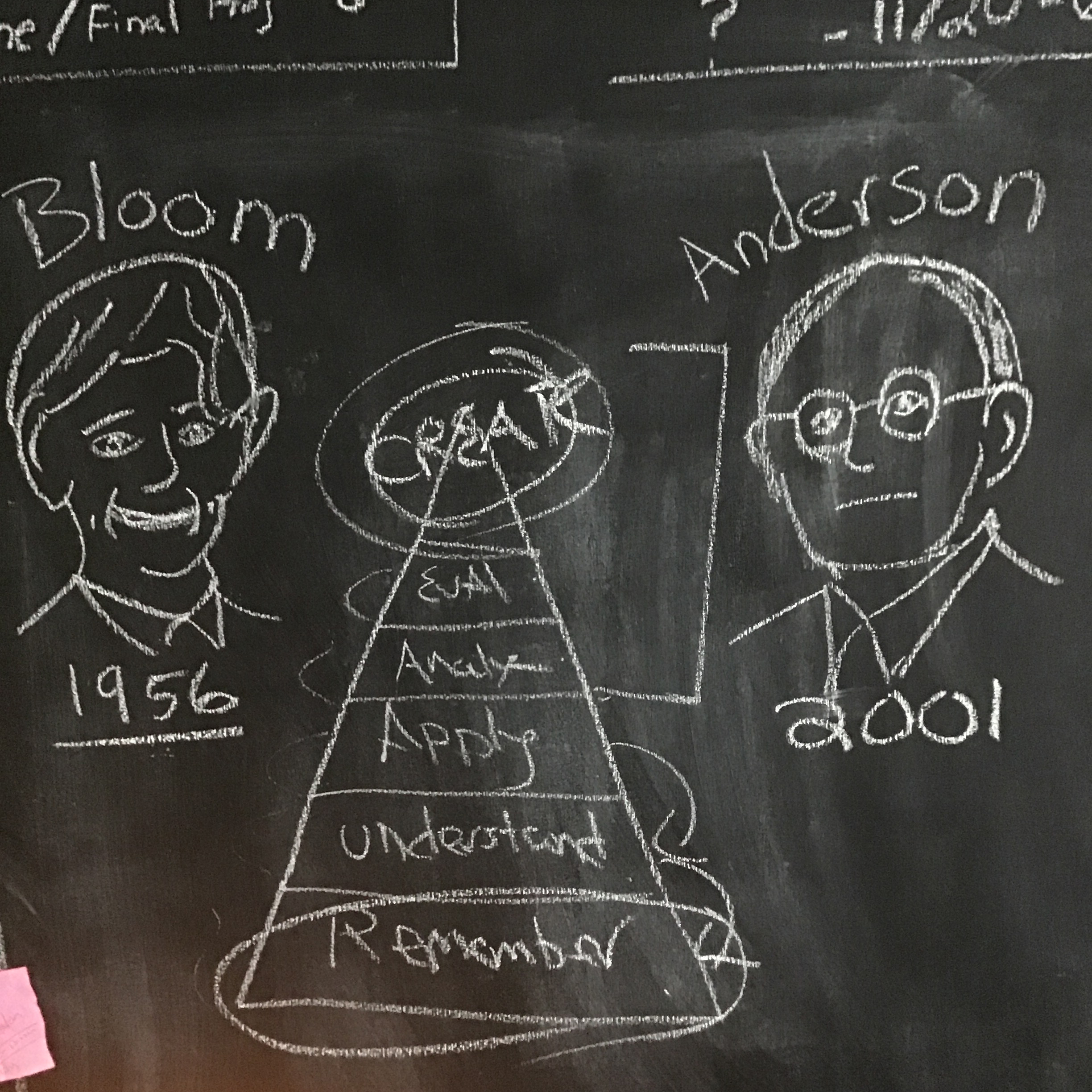
I’ve spent years shaping engaging online courses and leading program redesigns at the graduate and undergraduate levels. With a doctorate in instructional technolgoy and distance education it’s a real passion that I share here.
Newsletters & Writing

I write monthly newsletters for each of my projects—thoughtful reflections on teaching, sailing, and creativity. Sign up for the ones that match your interests or browse past editions.
Living Intentionally

Whether designing a course, parenting aboard a boat, or writing by lantern light, my goal is the same: to live and work with intention. I share thoughts on minimalism, purpose, and navigating uncertainty.
Watch, Read, Listen
-
How to leverage The Hero’s Journey in Instructional Design Steps 5-9
As we consider how much the learner’s journey and the hero’s journey overlap (which makes sense because our learners are the hero of our stories), how can we as instructional designers leverage what the hero’s journey can tell us to better help our learners. Today I want to share how we can apply the five…
-
How to leverage The Hero’s Journey in Instructional Design Steps 1-4
As we consider how much the learner’s journey and the hero’s journey overlap (which makes sense because our learners are the hero of our stories), how can we as instructional designers leverage what the hero’s journey can tell us to better help our learners. Today I want to share how we can apply the first…
-
The Hero’s Journey as a Learning Template
Joseph Campbell describes 12 steps in The Hero’s Journey. And when we look at these steps we can see not only how they fit within the 3 act structure but also how they describe the typical learner’s journey as well. The 12 steps are: 1. Ordinary World 2. Call To Adventure 3. Refusal Of The…
-
The parallels between the three-act structure and a quality learning experience.
When we take a closer look at the three-act structure it can be difficult not to see the parallels between it and a quality learning experience. Both start in Act I with an introduction to all of the characters, the setting, and any needed backstories. Both move onto Act II where our Hero starts to…
-
Storytelling in Instructional Design a comic book example
I’ve always loved comic books and graphic novels. In addition to being works of art, they can also be an effective instructional medium that can leverage storytelling and scenario really well. One great example of this is the comic “Radio an Illustrated Guide” by Ira Glass and Jessica Abel. In addition to teaching a bit…
-
Storytelling as an instructional strategy.
Storytelling has been used to teach for as long as there has been language. We know this and we also know that human beings are natural storytellers. Yet there are still so many times as instructional designers when we find ourselves with an instructional goal our storytelling skills just can’t be found. This highlights the…
-
Leveraging Lessons from Operant Conditioning and Spaced Repetition in a simple technique.
Two of the more practical learning theories are Operant Conditioning and Spaced Repetition. And when they are combined you can use what they teach us as a solid strategy for boosting learner engagement and retention in your instructional design work. The lesson from Spaced Repetition is that in order to retain information we need to…
-
More Mind Mapping Details
Yesterday I shared some recommendations regarding Mind Mapping software and received a few questions asking for some information about what exactly a mind map is and when or how you would use one. Today I wanted to jump in with a screencast of the Mind Node software I mentioned yesterday as we go a bit…
-
Mind Mapping Recommendation
One organizational technique I use often is that of Mind Mapping. A mind map is a visual way of breaking down ideas and concepts hierarchically. A mind map starts with a central idea or concept and then branching out from that central idea are the keywords that represent the different aspects of that central idea,…
-
The importance of self-confidence and a supporting belief system.
Self Confidence, Self-Acceptance, and a Supporting Belief System. Now you may be asking yourself.. This seems like such a fundamental and foundational pillar of creativity why is it the last one we are talking about? I have a good reason. It can be easy to share platitudes. Believe in yourself. Really? For me believe often…
subscribe for updates
Stay in the loop with everything you need to know.
 Christopher Bergeron